Frosty Meadows Gray Tree Frog Mecca.

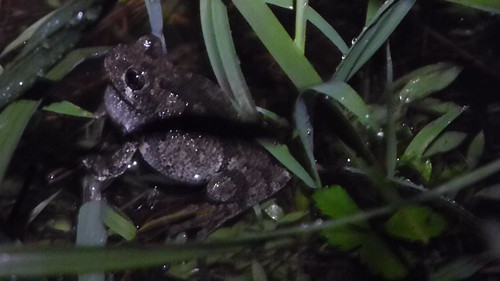
Went out to Frosty Meadows after a severe thunderstorm that hit our area. Driving down Chapel Road one could not help to see the many frogs both alive and squashed in the roadway. The frequency of such encounters only increased the further I traveled towards the low lying wet areas. I pulled over and hopped out into a  field following the deafening sound of calling frogs. Below is a pic of one of the many that I observed and video’d with my new Panasonic DMC T-53 water proof camera.

20110516(200357)

watch video of congregating Gray Tree Frogs and their calls.

Gray Tree Frog Mecca Experimental video Panasonic DMC- T53

Huntley Meadows Fairfax Chapter Master Naturalist Herp Tour

Introducing myself to FFMN students before taking them out in the field and promoting VHS.

Today Mike and I led memebers of the Fairfax Master Naturalist on a Herpetelogical tour through Huntley Meadows Marsh and the surrounding Palustrine Forest.  click here

P1000016

some of the encounters we had today.

P1000009

spotted salamander. Other cool amphibians were sighted as well by our group including a green tree frog click here  video by Michael Greogory

P1000013

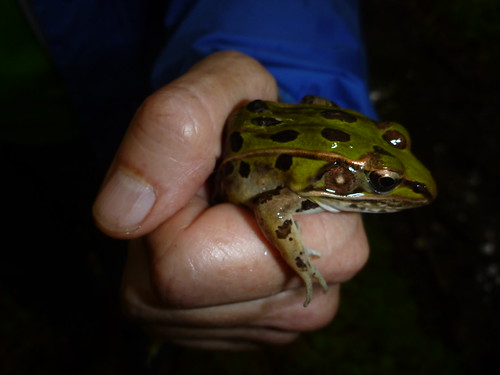
Southern Leopard Frog

P1000014

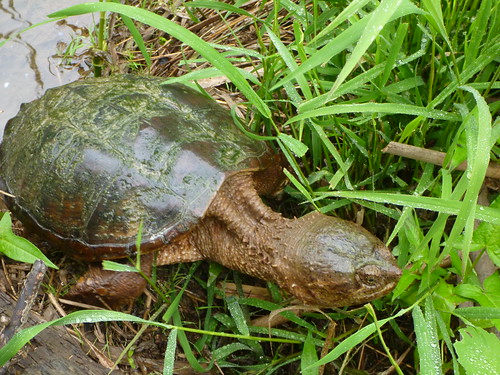
Eastern Snapping Turtle

Snapping Turtle at Hutley Meadows

P1000018

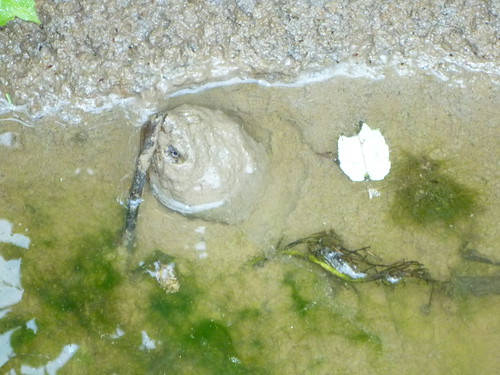
Can you ID this guy?

DSC_0052

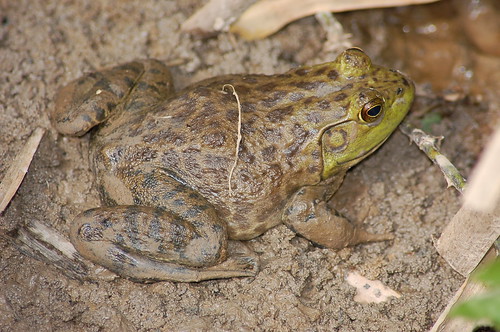
American Bull Frog

DSC_0050

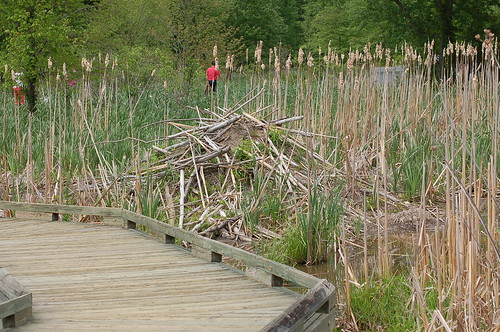
Beaver Lodge next to Marsh Boardwalk

P1000008

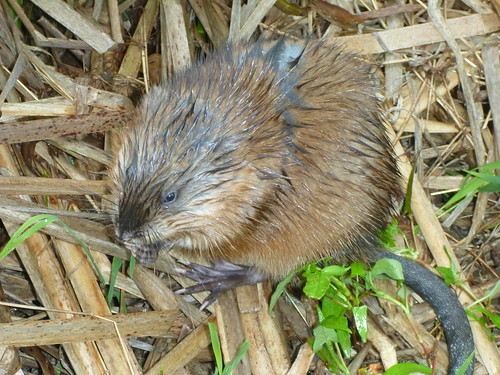
Muskrat that that Mike spotted next to boarwalk click here to watch muskrat feeding video by Michael Gregory

P1000010

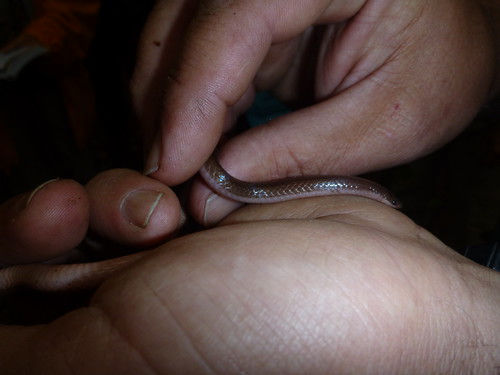
Worm Snake – a frequent encounter today in the woodlands.

P1010075

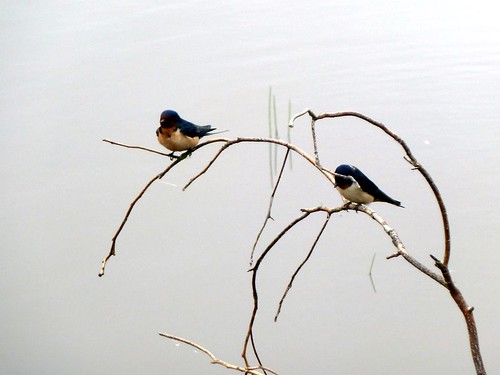
Pair of Barn Swallows (photo by Mike Gregory)

All the critters we caught were set free unharmed. Everyone seemed to have had a great time today!!! I know Mike and I did. More pics and video to follow!!!

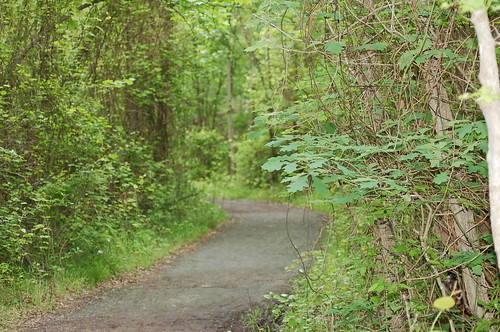
Huntley Meadows Palustrine Forest Nontidal Wetland

 DSC_0045

Huntley Meadows. A Palustrine Forest and Marsh Community Along Northern Virginia’s Eastern Fairfax County Coastal Plain.

On this field trip took place we explore an area along the coastal plain of Northern Virginia.  This area is known as Huntley Meadows, a wet lowland area remnant of geologic time when the Potomac River’s banks stretched further inland than where it is today.  The wetland area that is known as Huntley meadows has gone through several transformations naturally as well as anthropogenic. Nonetheless Huntley has rebounded into a freshwater wetland with some of the rarest habitats left in Fairfax County. 

At Huntley, we explored two wetland communities, a palustriane forest and a nontidal freshwater Marsh. Palustrine forests are defined as all nontidal wetlands dominated by trees, shrubs, persistent emergent plants, or emergent mosses or lichens, as well as small, shallow open water ponds. Ponds were not obvious within the forest. There was, however, evidence of drainage and damp depresions where water had collected during the springtime rains. It is my understanding much of the water that flows through Huntley’s palustrine forest comes from episodic rainfall.

The most obvious features of the palustrine forest in comparison the to the marsh is the variety of  broadleaf, deciduous hardwoods. These included red maple, several types of oaks and hickories, and birch trees. Several of these species exhibit multi-trunking a feature typical of trees that live in hydric soils. A few species such as red maple and sycamore thrived within the ecotone of the two comunities.  Absent from the forest were dense shrubs or an understory layer.  The lack of  smaller trees or saplings and other lowlying shrubs may have been due to overgrazing by local deer populations.  On ther otherhand what was most numerous in density was Japense stiltweed, an extremely opportunistic and invasive herbaceous plant that carpeted the forest floor.

The transition between Forest and marsh is abrubt and the two communities are different physically and biologically.  The most obvious difference is there are very few trees or woody plants in the marsh and there is a more permanent body of stadning water. A Marsh is a wetland dominated by herbaceous or nonwoody plants that often develop in shallow ponds or depressions. The first clue we were entering the marsh was the lack of woody plants and tree canopy. Instead there was an open area rich in herbaceous flora, muddy sediments and shallow water.  Diversity in flora was greater in this community than the forested region.      

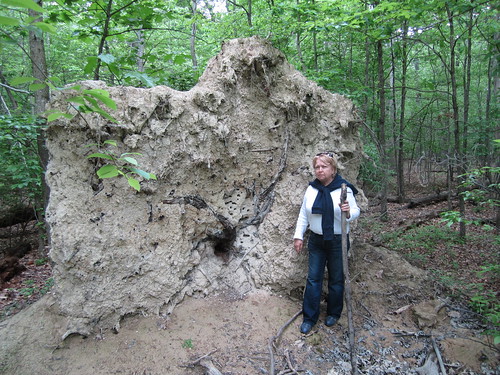
My Mom standing next to root ball of fallen tree

The area that is home to the two communities we focused on has been altered over the centuries by human occupation, but has always managed to rebound. Huntley Meadows is not just a static repository of the flora of flora and fauna, but an ecosystem rich in diversity that will continue to evolve though the ages.

Zone: Palustrine Forest Flora

Scientific Name Common Name  Plant Type Remarks
Toxicodendron radicans Poison Ivy Vine Abundant
Liquidambar styraciflua Sweet Gum Tree  
Microstegium  vimineum Japanese Stilt Grass Grass Abundant/invasive
Quercus phellos Willow Oak Tree Infrequent
Boehmeria  cylindrical False Nettle Herb Simple toothed leaves, flowers off stem node
Betula nigra River Birch Tree Multi trunk papery bark
Acer Rubrum Red Maple Tree Multi Trunking


Zone:  Palustrine Forest and Marsh Ecotone

Scientific Name Common Name  Plant Type Remarks
Onoclea sensibilis Sensitive Fern Herb Obligate. Moisture sensitive
Platanus occidentalis Sycamore Woody/Tree  
Acer Rubrum Red Maple Woody/Tree Multi Trunking
Veronia novemboracensis NY Ironweed shrub Aster family purple flowers


Zone: Marsh

Scientific Name Common Name  Plant Type Remarks
Cuscuta gronovii *Dodder Vine Parasitic *
Vibernum dentatum Arrow-wood Vibernum Shrub See elderberry. Relative and similar charact.
Cyperus strigosus Flatsedge? Sedge Abundant
Impatiens capensis Jewel Weed Herbaceous Fleshy stem, orange yellow flowers. Remeedy to Poison Ivy
Sambucus cnanadensis Elderberry shrub Umble fruits. Red color compound leaves
Salix nigra Black Willow Tree  
Juncus effusus Common rush? Emergent  
Scirpus cyperinus Woolgrass Sedge? Sedge  
Eleocharis Spikerush Emergent “conelike” flowers at tip. Dense can form hammocks in etland
Leersia oryzoides Cutgrass Grass Recurved epidermal cells-Cuts!
Asclepias incarnata Swamp Milkweek Emergent  
Rosa palustris Swamp Rose Shrub Got one in my eye last March!
Typha latifolia Broad leaf Cat-tail Emergent Male and female flower on same sructure
Cephalanthus occidentalis Buttonbush Shrub Flowers round colonial buttons, butterfly pollinated
       
Hibiscus moscheutos Swamp Mallow/Marsh Mallow Shrub Large showy white flowers. Pin type flower
Polygonum arifolium Halbard-leaved tearthumb Herbaceous Recurved spines on stem
Polygonum sagittatum Arrow-leaved Tearthumb Herbaceous  
Saururus cemuus Lizard Tail Emergent Elongated flowers, obligate wetland
Hydrocotyle ranunculoides Pennywort Emergent Aquatic very dense
Llex verticillata Deciduous Holly Herbaceous Winterberry


Zone: Palustrine Forest and Marsh (observed in both communities)

Scientific Name Common Name  Plant Type Remarks
Acer Rubrum Red Maple Woody/Tree Multi Trunking
Platanus occidentalis Sycamore Woody/Tree Large leaves


IMG_0110

Mom standing next to root ball of fallen tree

IMG_0114

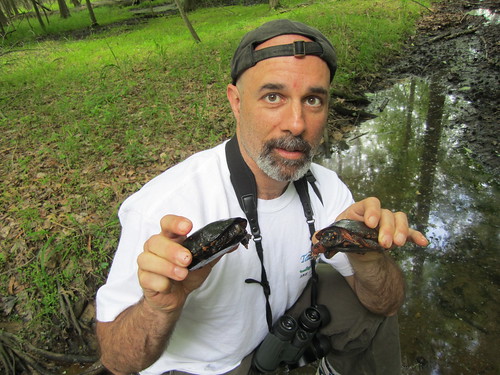
Me holding a pair of spotted turtles I caught in a drain leading from forest into open wet area.

Fairfax Station Patch Article (by Elizabeht Vittori)

IMG_0018

Walney Amphibian Campfire Program

As a young boy growing up in Centreville and Clifton, Mark Khosravi always had a fascination with nature.

“Especially things that crawled or moved around,” Khosravi, who now lives in Clifton, said.

He spent much of his time in the then woods near Cub Run observing turtles, fish and frogs.  He credits several family friends with nurturing his early curiosity, teaching him to fly fish, introducing him to nearby waters via boat, and instilling in him an appreciation for Civil War history.

A biology teacher at Lake Braddock High School since 1998, Khosravi now shares his passion for the outdoors, particularly reptiles and amphibians, with his students.

“Something so common to me like a box turtle draws excitement and questions from the kids,” Khosravi said.

While he enjoys seeing young student’s reaction to the species he introduces in class, he is concerned that young people today do not have the same unfettered access to the natural world’s activity that he did.  

7fbae5e8744b9ac15eb9a093c89b6f1b

“When I was a teenager, I had a demanding schedule.  I played sports, but we were still outside in open areas and spaces,” Khosravi said.

As a resident of the Southwestern part of Fairfax County for 45 years, Khosravi is concerned by the changes he observes in the local environment.  

While he was quick to point out that his observations come strictly from personal experience, he has noticed more trash and solid waste in local streams and parks, naming Bull Run, Hemlock and Popes Head parks specifically.  

“Take queen snakes for example; you just don’t see them that much anymore,” Khosravi said. He noted the decline in several bird calls that he heard regularly as a boy.  

He suggested the rapid pace of area development may be the cause.  As a teacher, a volunteer naturalist and a blogger, he hopes to reverse that trend.  In fact, Khosravi has several classrooms that stretch well beyond the campus of Lake Braddock High School.

A member of the Virginia Herpetological Society and several other historical and conservation-conscious groups, Khosravi spends a good part of his spare time educating area residents on threats to indigenous local wildlife.  

His blog, “On the Trail with Mark and Mike, Our Encounters with Nature and the History Beneath our Heels” details his first-hand experience with all things natural from arachnids to blooming bluebells to the moon and beyond.

71d6bcf1086109a5e2c46a87adf7bbbd  

On any given day, residents might expect to find him monitoring streams and wildlife, working with Fairfax county biologist Vicky Monroe, or hosting a seminar on historical awareness.  

Khosravi admits that his varied interests often pose a challenge to his schedule.  

“I wish I had a photographic memory.  I want to absorb everything I can and stay updated in current knowledge. I don’t feel like I’m doing enough,” Khosravi said. “There’s not enough time.”  

A self-described collector, his goal is to procure “a collection of knowledge.”  

He said he accepts and may even relish the demands of pursuing so many passions concurrently: “There’s discovery even at my age.”