Banshee Reeks Nature Preserve 6/25/2011

Mike his wife Andrea and I went for a little cruise over to Banshee Reeks Nature Preserve today in search of new flora and fauna for our life list. Weather conditions were excellent sunny around 80 degrees and low humidity. The preserve,located off the beaten path accessible from Evergreen Mills road in Loudon County, is an 1840’s dwelling situated on rolling open hills and some areas of mixed forest adjacent to Goose Creek. 

[flickr id=”5873235900″ thumbnail=”medium” overlay=”true” size=”medium” group=”” align=”none”]

 Today we set our sites on birds along Goose Creek and the adjacent riparian forest that separates the creek (more like a small river) from the open rolling hills meadow habitat leading up to the Natue Center.  Birding quickly turned to amphibian searching given that many of the birds chose to be high in the densely coverd canopy and  could only be identified by their calls . We prefer to see things!!!  We caefully lifted a few logs and and rocks near the creek and found two species of Salamanders.

[flickr id=”5872677227″ thumbnail=”medium” overlay=”true” size=”medium” group=”” align=”none”]

(above: Mike checks for more salamanders in spring that feeds into Goose Creek.

Both of the same Genus Eurycea but two different species the common names of which are known as longtail and two line salamanders.

[flickr id=”5871566882″ thumbnail=”medium” overlay=”true” size=”medium” group=”” align=”none”]

Further along the trail Mikes wife Andrea discoverd a garter snake and some juvenile spring peepers.

[flickr id=”5871566986″ thumbnail=”medium” overlay=”true” size=”large” group=”” align=”none”]

 Overall a fun time and new site to explore in the future.

[flickr id=”5871567058″ thumbnail=”medium” overlay=”true” size=”medium” group=”” align=”none”]

Below me holding one of the two juvenile spring peepers Andrea found.

[flickr id=”5871010231″ thumbnail=”medium” overlay=”true” size=”medium” group=”” align=”none”]

Big Meadow Blue Ridge Tour June 16 2011 (photos by Michael Gregory and Mark Khosravi)

[flickr id=”5907472726″ thumbnail=”medium” overlay=”true” size=”large” group=”” align=”none”]

Red Squirrel

[flickr id=”5906917015″ thumbnail=”medium” overlay=”true” size=”medium” group=”” align=”none”]

Eastern Tohee

[flickr id=”5906916889″ thumbnail=”medium” overlay=”true” size=”medium” group=”” align=”none”]
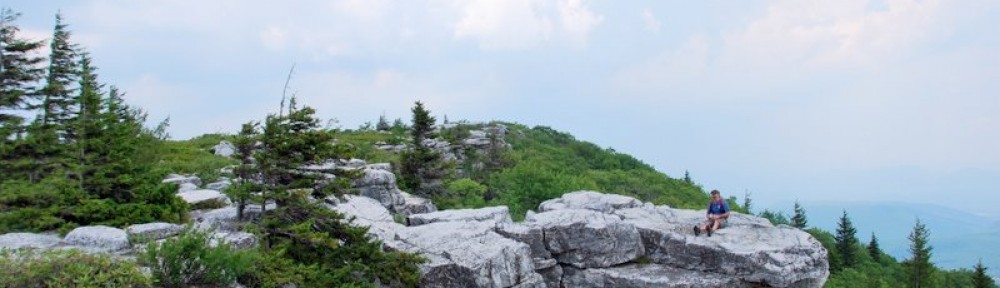
Talus Slopes

Hawksbill Mountain Shenandoah Salamander

[flickr id=”5907472676″ thumbnail=”medium” overlay=”true” size=”large” group=”” align=”none”]

Salamanders

Spring Salamander


Animal Survey Clifton 8 acre and Hemlock Overlook Park

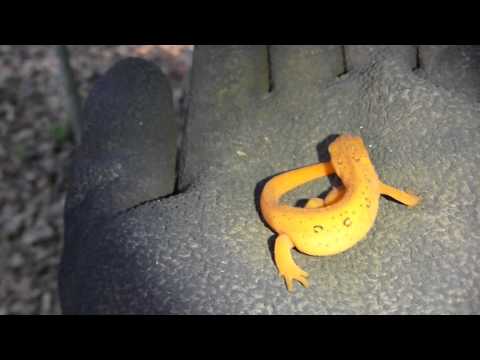
Below a Red Eft I found during my excursion today. Red Efts are immature terrestial forms of the Red Spotted Newt which is aquatic. The eft stage is brightly colored and generally a “bad Taster” to potential predators. It is not uncommon to see these out in the open on the forest floor.

Red Eft

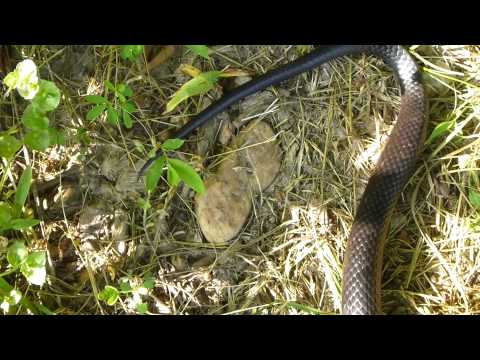
Below Black Rat Snake found along an edge where meadow meets the forest. These snakes are our largest snakes in the area. They are nonvenomous but doo vibrate their tail and will bite if agitated. The snakes are excellent climbers and will feed on a variety of prey items such as birds, bird eggs, and small mammals. In this video you will see how the animal vibrates its tail to let me know it is prepared to defend itself. Many people claim they have seen a rattle snake when they encounter black rat snakes (in fact many nonvenomous snakes will vibrate their tails).

Black Rat Snake

Clifton Excursion 6/6/2011


[flickr id=”5812097480″ thumbnail=”medium” overlay=”true” size=”original” group=”” align=”none”]

Went out on a little after work excursion in my neighborhood to look around for critters and any unusual plants.  Didnt see anything I have not seen before but was able to stumble onto an animal I hadnt seen in about two years. The Red Eft si one of my favorite animals.  The eft is a type of salamander and is also known as a red spotted newt. The eft stage is the middle immature terrestial stage of the red spotted newt.  Red Spotted Newts begin as aquatic gilled larvae hatched from eggs. At some point the aquatic larva then metamorphose (much like tadpoles change into frogs) into a the red spotted brightly colrored terrestial eft stage.  After as much as 7 years in this satge the eft will return back to the water and transform into green aquatic form retainings its red spots.

[flickr id=”5811532555″ thumbnail=”medium” overlay=”true” size=”original” group=”” align=”none”]

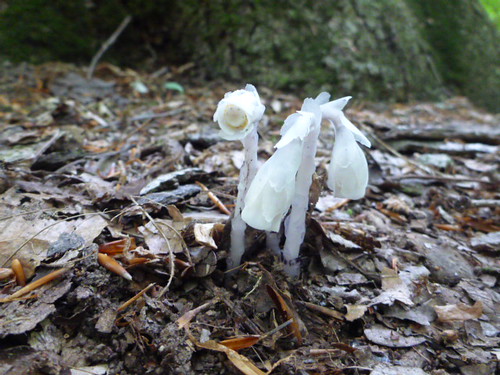
Also saw the ghostly looking Indian Pipe plants.

[flickr id=”5811532173″ thumbnail=”medium” overlay=”true” size=”original” group=”” align=”none”]

VHS Survey June 4, 2011


DSC_0122

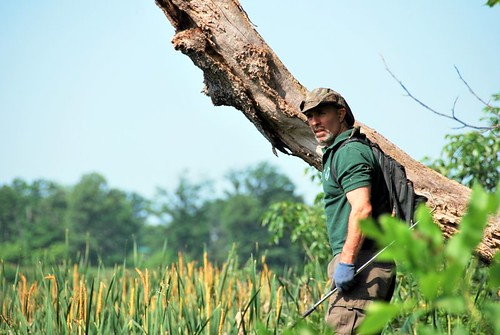
Above: That’s me in the marsh looking out over the Occoquan River.

P1000190

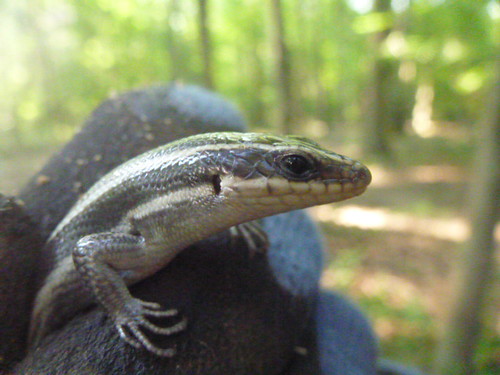
Five Lined Skink

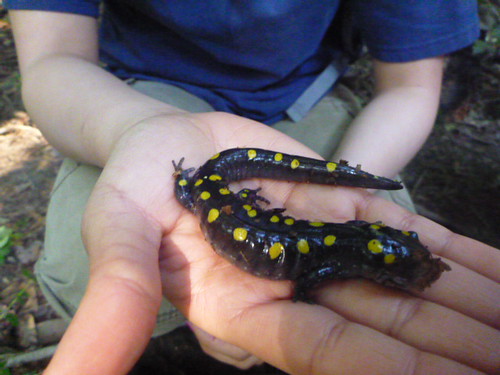
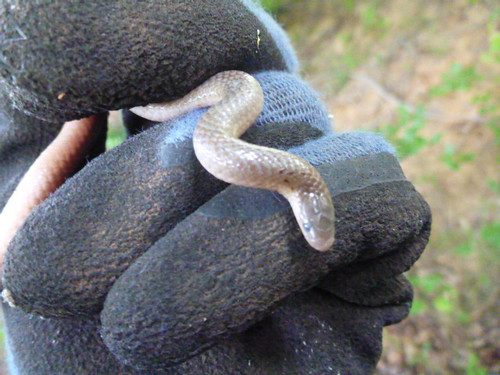
I sit here typing away at 3:55 am with not one but two swollen hands from bee stings received yesterday while conducting a survey for VHS and the Fairfax County Park Authority. Today was a good day as far as weather was concerned-couldn’t ask for nicer conditions. Clear skies and temp ranged between 70-80 degress.  From the start it appeared that this might turn out to be a species rich site. Almost instantly I recovered a skink and our VHS survey leader a beautiful spotted salamander. Another participant found a worm snake. Worm snakes turned out to be the most abundant finds amond the reptiles recovered today.

P1000188

Spotted Salamnder

P1000193

Worm snake

Other species found today included cricket frogs, eastern box turtle, mud turtle, black rat snake, black racer snake, american toads.

P1000215

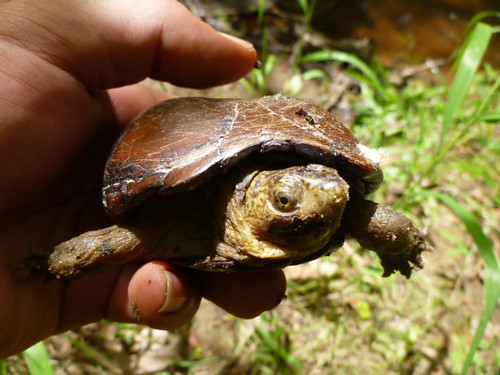
Mud turtle found by Michael Gregory

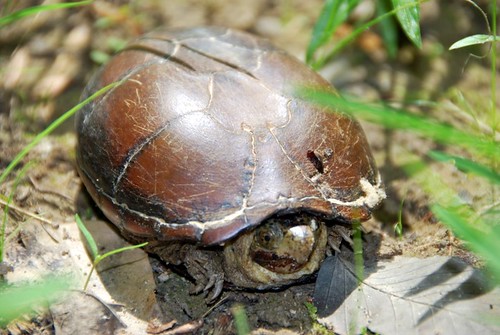
Eastern Mud Turtle
Kinosternon subrubrum subrrubrum

Mud Turtle

This small water turtle was found on land. Unlike other aquatic
turtles, this Mud Turtle will feed out of water. Note the double hinge
and 11 scutes on plastron.

DSC_0135

photo by Michael Gregory:

cricket frog

Above is video of cricket frog we caught within same vicinity of the mud turtle

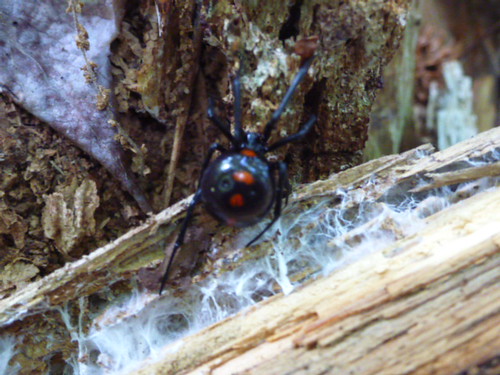
Other cool sitings included a black widow spider and indian ghost pipe plant and a red breasted chat.

P1000203

Black widow spider above and indian pipe plant below

P1000220