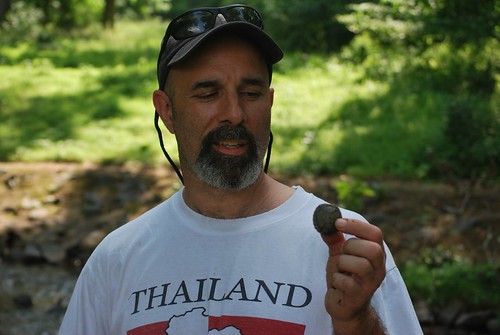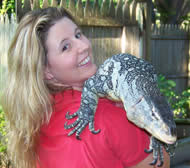
Reptiles Alive! is the most popular traveling wildlife education organization based in the northern Virginia and Washington DC area. Please Visit http://www.reptilesalive.com/
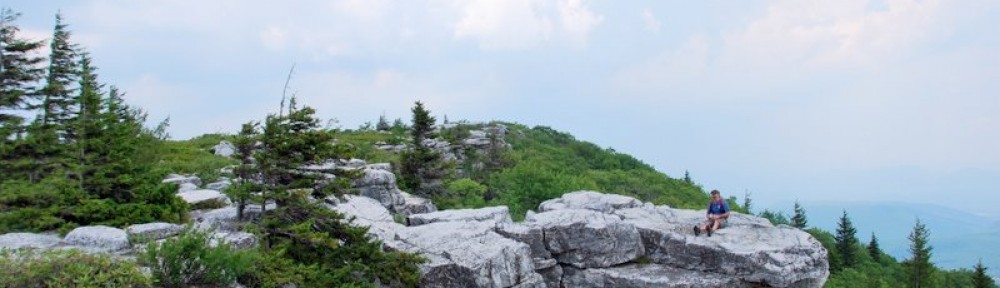
Reptiles Alive! is the most popular traveling wildlife education organization based in the northern Virginia and Washington DC area. Please Visit http://www.reptilesalive.com/
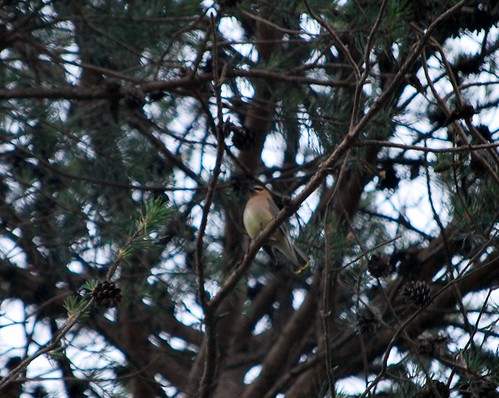
Cedar Waxwing Bull Run (photo by Mike Gregory)
Mike and I went first to the old Stonebridge site near the 1st Battle of Bull Run. While on the boardwalk we saw a hug barred owl and further up a cedat waxwing. Other than that not much else.
Later on we visited Walney and walked the Pond trail. Didn’t see much except for one led back salamander and what possibly was a dusky. At the pond was a different story. Along the northwestern bank near the deep end of the pond I spotted a baby Red Ear Slider and opposite this location near the boardwalk and in waist high tall grass was a coverboard which produced a garter and a northern water snake.
Baby Red Ear slider caught next to bank of Walney Pond (photo by Mike Gregory)
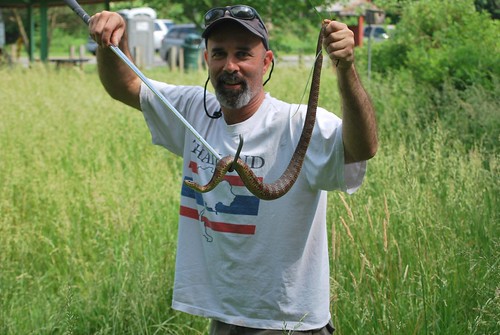
Northern Water Snake in tall grass along Walney Pond (photo by Mike Gregory)
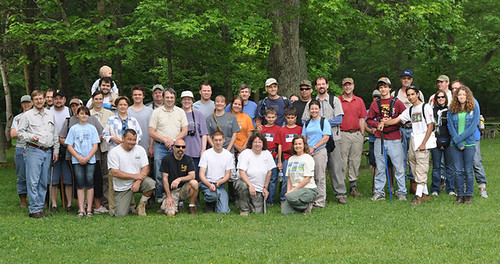
Above photo is the Survey Team Representing the Virginia Herpetoligical Society
http://www.cafepress.com/vaherpsociety
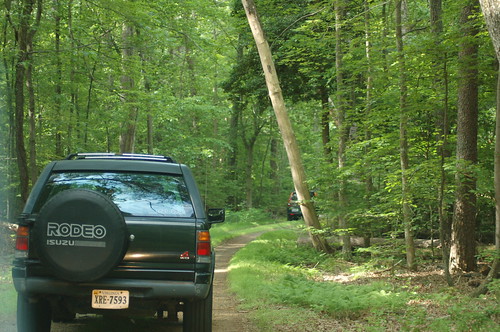
The road leading into the Refuge
Memebers of the Virginia Herpetological Scoiety conducted a Reptile and Amphibian Survey of Mason Neck Park duringthe weekend of May 21-23. We split up into teams to survey six predetermined areas of the park for its Herp fauna. As part of team 6 I had the opportunity to trek through areas of the park that was otherwsie off limits to the general public. Our team did well finding the majority of different species as well as the most quantity of species. Nothing unusual however was recorded for the first time and there were a lot of species previously recorded over the years that were not found.
Our techniques for locating species were simple. Find a designated area, fan out individually then look, listen and if possible capture then ID and confirm ID. Our capturing technique utilize snake hooks, stump rippers, dip nets, our hands and tutrtle traps. None of the animals are harmed often the surveyer is from briars, insect bites, snake musking and occaisional bites (nonvenomous species).
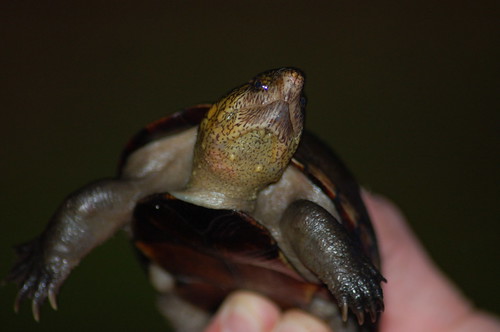
One of the two Mud turtles captured in our turtle traps.
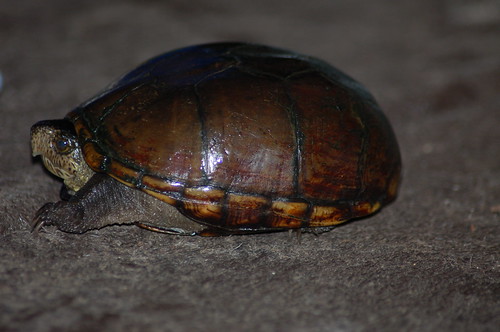
Ventral shot of the same animal
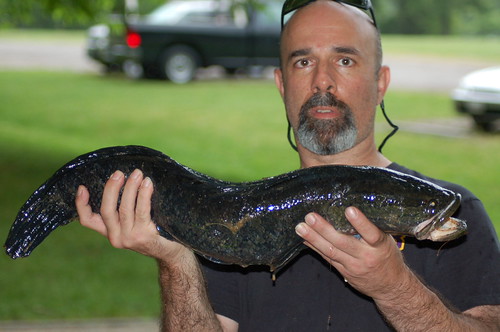
Me holding an unexpected bycatch from our turtle traps. Last year snakeheads about the size of an adult human index finger were caught with dip nets form the same ponds where this beast was captured. Had I known these guys were in the pond I may have thought twice about wading in to set the turtle traps.
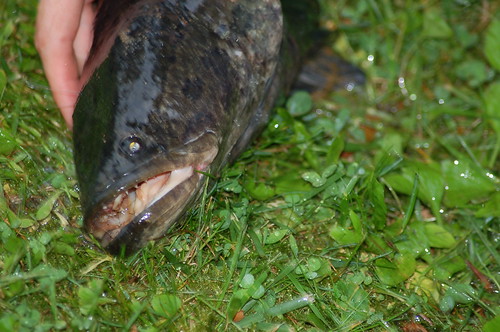
Mouth of the notorious snakehead fish.
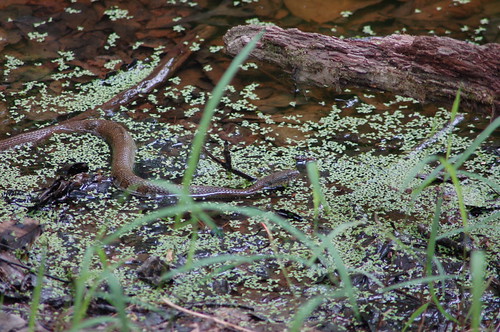
Cool shot of a Northern Water Snake cruising the wetland
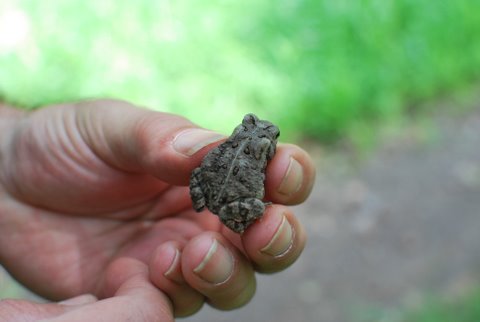
Surprisingly didn’t see too many of these guys. Here I am holding an American toad found in the abandon road way.
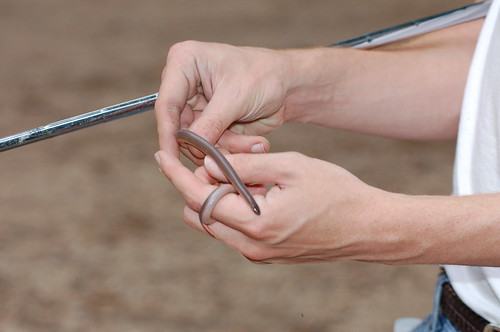
Perhaps the most abundant snake caught by our team. Here Daniel holds one of two worm snakes found together in the same rotting log.
Presumably a nice juvenile five lined skink scurrying in between fallen logs.
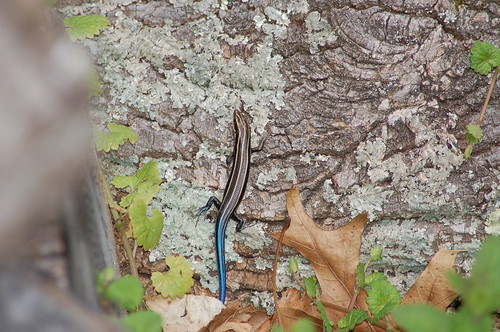
One of the species I had hoped to find and we did. The ground skink, although common, is the smallest lizard we have in the region. The capture of this animal was a collaborative effort between Daniel and myself. Daniel spotted it and I caught it. I have only captured one other several years ago. They are super small and quick. Usually you hear them rustling in leaf litter but by the time you hear them they are already gone. Fortunately for me this one chose to run through a sewer pipe where I was able to persue and capture it.

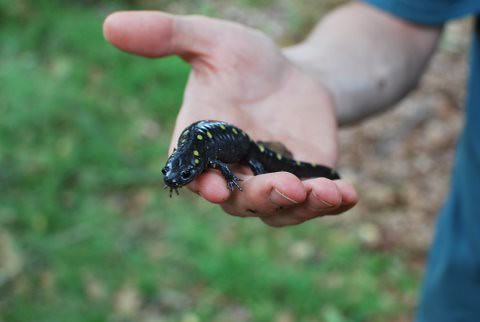
John Orr with a spotted salamander. Several were caught right at the start of our survey. Onoe of my favorite amphibians.
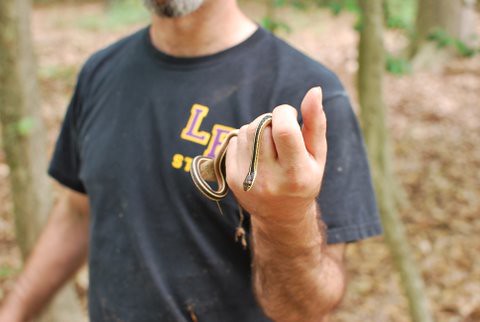
This was my first capture of the day. A nice ribbon snake. Ribbon snakes were the third most abundant snake species we caught that day. All were caught in the vicinity of the inland wetland areas.
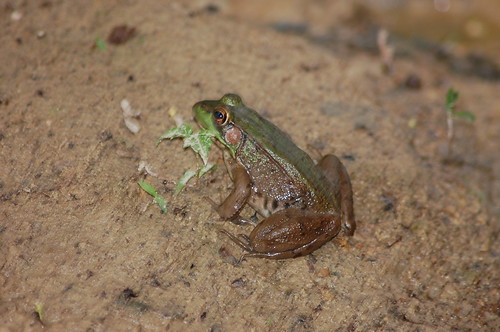
These green Frogs were everywhere. If you didn’t see them you certainly heard them. Their calls sound similar to a banjo pluck. Green frogs were one of the most common animals in the wet areas
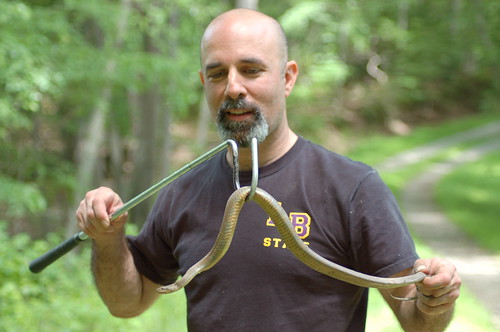
The inland wet areas proved to be very productive for my searches. Here I am holding a recently captured Northern Warter Snake.
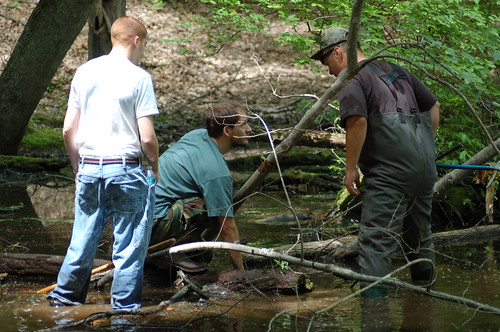
John Orr (Center), our official guide into the Refuge has located a very large Eastern Snapper. Unable to remove the animal from under a log he calls for reinforcements. Michael Gregory (right) and Daniel Michaleson (left) enter the swamp to assist.
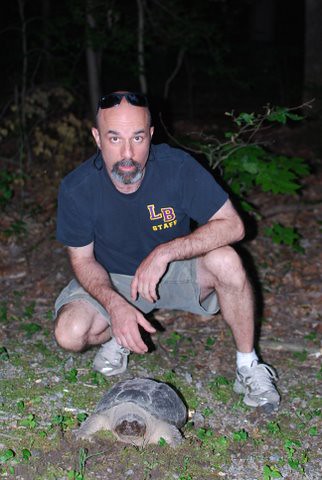
On our way to set turtle traps, Mike and I stopped in the road to get a look at this hefty Eastern Snapping Turtle. Since the survey hadn’t officially kicked off yet we couldn’t
count this toward our species list.
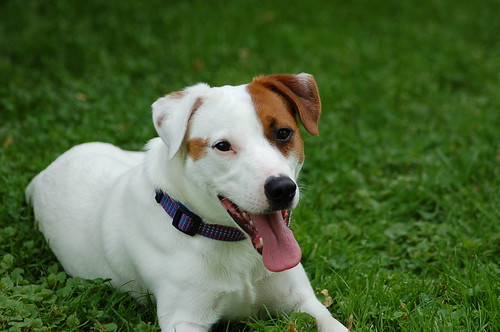
Rescued Petey from the Animal Shelter in May 2010. Petey definitley has a personality of his own. Our Vet estiamtes his age at just shy of one year. This dog should be named bullet given his speed and he has tremendous leaping ability. Watch out squirrels this dog is not only fast but smart! He’s not a Romeo nor is he like Annie. Petey is a sweet dog but full of mischief
Annie is cetainly one feisty JRT and she doesn’t tolerate other dogs that cross her path. She is also very resialiant Old lady at 14 and has been throguh a lot in her years. She has lost much of her teeth and one eye as result of being infected simulataneously with lyme disease Rocky Mountain Spotted Fever. She has recovered and adapted well however and is still going strong. Annie still enjoys walking around the town and whenever she can still gives the bigger dogs on her block a hard time.
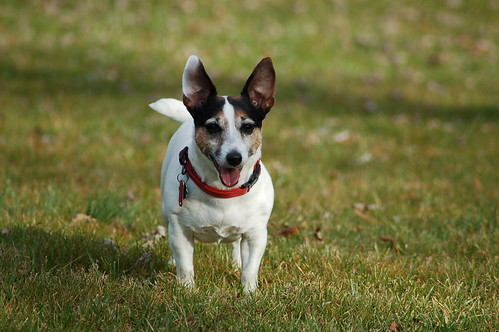
Annie in backyard December 2005