When Virginia chose to secede from the Union, two days after Abraham Lincoln’s call for 75,000 troops to defend the Union and put down the rebellion in the southern states after the fall of Ft. Sumter in South Carolina, life in northern Virginia was to irrevocably change. By June, scattered regiments of Confederate troops had begun to gather in Prince William and Fairfax Counties, just as Union soldiers were assembling in and around Washington, D.C. The prevailing strategy for both armies at the time, Federal and Confederate, was to capture the capital of the opposing side and declare victory. This objective was expected to be quickly and relatively painlessly achieved by each side.
On May 21, 1861 Gen. Irvin McDowell was put in charge of the newly created Dept. of Northeastern Virginia and he set about training his green army. Down in Richmond, on May 31, 1861, Gen. P.G.T. Beauregard was given command of the Confederate Army of the Potomac. Both generals from the beginning realized the importance of controlling Manassas Junction, the intersection of two major railroad lines, the Orange & Alexandria and the Manassas Gap Railroad. Anticipating that if the Federals were to move south they would head first for Manassas Junction, the Confederates immediately established a defense line along Bull Run River. Beauregard was in Manassas by the next day. He organized his force into six brigades. By the middle of July fortifications and earthworks had been constructed and all of the crossings on the run were guarded, from the Stone Bridge all the way to the Occoquan. The strongest concentration of forces was in approximately the middle of the line at Mitchell’s Ford.
Although Beauregard had initially favored an offensive strategy, the idea was rejected by Richmond and he was forced onto the defensive. He believed, probably because of intelligence received from a very well organized Confederate spy ring operating out of Washington, D.C., that when McDowell chose to strike it would be at Mitchell’s Ford. Beauregard clung to this conviction up until the morning of the big battle on July 21st, when Union troops appeared at the Stone Bridge and Sudley Ford and he had to quickly deploy most of the nine brigades he had assembled between Mitchell’s and Union Mills Fords towards the Warrenton Turnpike where the battle had begun to unfold.
On the 16th of July, 1861 McDowell began to advance his army along four separate routes from Washington towards Manassas Junction. By the end of the next day, the Confederate army had abandoned its many camps in Fairfax County and retreated across the run to Prince William County. Though McDowell had originally planned to strike at the Confederate right flank near the junction, by the morning of July 18th he had changed plans and decided to concentrate his forces at Centreville and hit the Confederate right flank. The terrain there was more advantageous for making an attack.
McDowell’s army was organized into five divisions. He ordered the division of Gen. Daniel Tyler to take Centreville at first light on the 18th. As Tyler’s division advances to the little town early on the morning of the 18th, the brigade of Col. Israel Richardson is in the lead. He arrives about 9 a.m. and finds the town evacuated by the Confederates and so heads down the road to Blackburn’s Ford in search of water and a place to rest his men. He stops the brigade beside a spring, where Gen. Tyler joins them at mid-day.
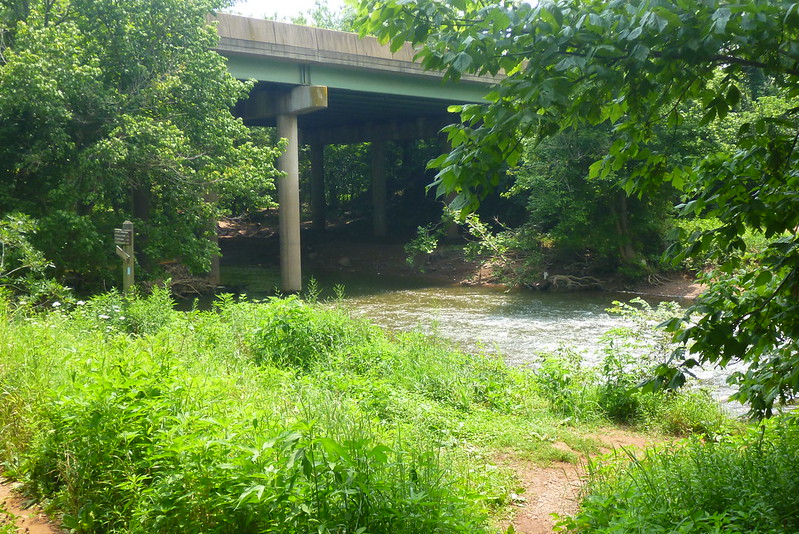
Tyler has been instructed by McDowell to “Observe well the roads to Bull Run and Manassas. Do not bring on an engagement, but keep up the impression that we are moving on Manassas.” He and Richardson decide to reconnoiter the roads leading to the two nearest fords, Blackburn’s and Mitchell’s. They arrive at a clearing near the fords and can see very well that an enemy brigade is guarding Mitchell’s Ford. What they can’t see is that a brigade of Confederates under Gen. James Longstreet is concealed in the brush and cover surrounding Blackburn’s Ford. Tyler isn’t naïve enough to assume that the ford is unguarded, but he has no idea of what the strength of the force there could be and he decides to try and find out.
Up to this point, Tyler has been in compliance with McDowell’s directive. He is overconfident, though, because of the retreat of the Confederates on the 17th before the advancing Union army. He assumes that they will continue to retreat, and probably with visions of glory for himself and his division he defies the order not to engage in battle and begins an attack. He has with him two or three companies of men and some artillery and cavalry. The battle at Blackburn’s Ford begins, and ends, as an artillery duel between the two armies.
Tyler calls forward the rest of Richardson’s brigade. Initially he has only the two cannons of Lt. Benjamin firing on the Confederates, until the arrival of Sherman’s Battery led by Capt. Romeyn Ayres. He places Ayres beside Benjamin and the two sides, Union and Confederate, fire back and forth at each other to little avail. The duel is brief and then Col. Richardson orders forward two companies of the 1st Massachusetts. Initially they push aside the few enemy skirmishers they encounter (Longstreet’s Virginians). When they move into the woods, they meet a company of Confederates and confusion ensues. Both the Massachusetts men and the Confederates are wearing gray uniforms. A group of Michigan soldiers arrive at the scene and have trouble as well discerning who’s who. A gray clad Lt. William Smith of the 1st Mass. stumbles into the woods and calls out, “Who are you?” to the soldiers there. “Who are you?” the Confederates yell back. “Massachusetts men,” Smith answers and is promptly shot dead.
The Federals continue their advance to an open slope above the ford and meet terrible fire from three sides. They are forced to retreat back to the hill where the artillery is located. Although Tyler is being cautioned by an aide of McDowell’s not to proceed, he orders two of Ayres’ guns forward to the skirmish line and deploys Richardson’s entire brigade towards the ford.
Gen. William t. Sherman, with his brigade, was waiting in reserve at Centreville and he is called forward. “For the first time in my life I saw cannonballs strike men and crash into trees…sickening confusion,” he remembers after the battle. He also displays a bit of humor. As soon as his men come under fire they begin ducking and hiding behind trees. He yells at them for ducking the shells, “By the time you hear them it’s too late!” Just then, as an extremely loud shell whines overhead, Sherman instinctively leans in close to his horse’s neck. He straightens back up, grinning, and tells them, “Well boys, you may dodge the big ones!”
On the opposite side of the run, Gen. Longstreet is caught in the middle of fire between the Federals and the 7th Virginia. He is forced to dismount and lie on the ground until the firing ceases. His horse runs off without him and he is briefly assumed to be killed. On their way into the battle, the 7th Virginia pass Gen. Beauregard, who has established temporary headquarters at the McLean farm nearby. Beauregard is in full Confederate uniform – and wearing a straw hat!
By the late afternoon, the 12th N.Y has been deployed to the left of the artillery and the 1st Mass. and the 2nd and 3rd Michigan are on the right. The New Yorkers eventually break and run, exposing the 1st Mass. and the Michiganders. Col. Richardson yells to them, “Why are you running? There’s no enemy here. Where’s your colonel?” He sends word of this to Gen. Tyler who personally comes over. Richardson still wants to rally his men and charge again, thinking he can still dislodge the Confederates. He didn’t earn the nickname “Fighting Dick” for nothing. Tyler decides to retreat though. McDowell arrives and is angry at Tyler, who then proposes that he could still beat Beauregard. McDowell curtly tells him that he doesn’t intend to fight the main battle that day. He orders Tyler to re-occupy the hill where the fight was begun though. When McDowell leaves, Tyler again disobeys orders and marches his men back to Centreville.
The battle did provide useful intelligence in that it revealed the strength of the Confederate position there. The first taste of warfare for many of the participants, it was perceived as a Union loss. Tremendous psychological damage was done to the Union morale, however, while Confederate confidence was greatly bolstered. The Union casualties were 83. The Confederates reported 68.